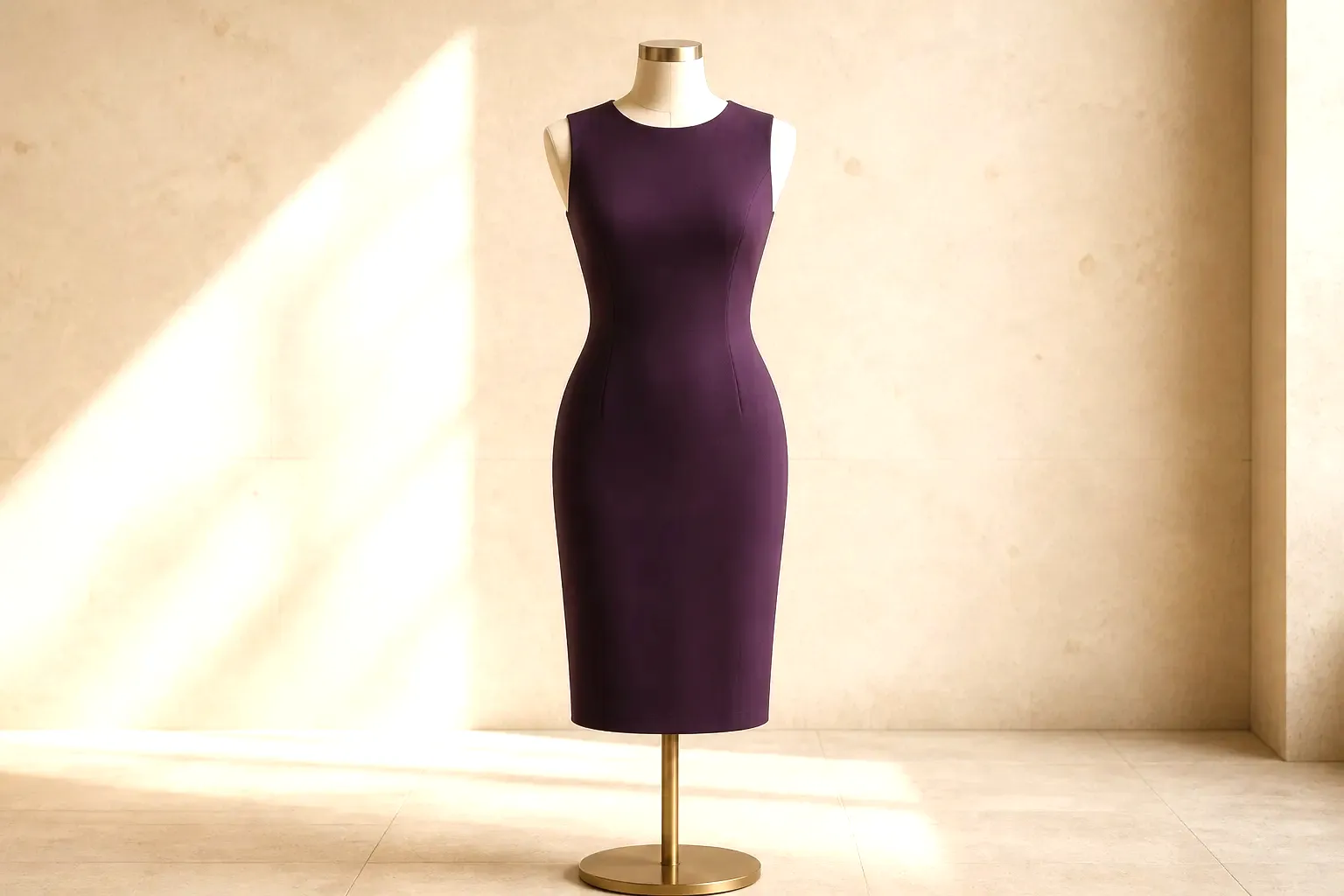
These are editorial ratio centres for a nearest-profile comparison, not medical categories or size charts. The calculator measures how far your two ratios sit from each of the five centres and reports the closest, along with how close the runner-up came.
An inverted triangle carries its width at the top. The bust and shoulders measure noticeably more than the hip, so the outline narrows as it goes down. It is the reverse of a pear, and the advice reverses with it.
One limitation worth stating plainly. The calculator uses bust as a stand-in for upper-body width because it does not collect a shoulder measurement. For most people the two track together closely enough. For someone with broad shoulders and a small bust the result will understate this shape, and the guided questions route on the tool handles that case better.
How to measure yours
Measure the bust at the fullest point, the waist at its narrowest, and the hip at its fullest point including the upper thigh if that is where the widest part falls.
Divide bust by hip. An inverted triangle sits near 1.14, meaning the bust measures around fourteen percent more than the hip. That is a large gap and usually obvious once the numbers are written down.
If the figure comes out closer to 1.02 with a soft waist, the shape is reading apple instead. The bust-to-hip gap is the thing to check first, because it is the defining feature.
An hourglass has a balanced bust and hip at 1.00. If the bust is well ahead of the hip, it is not an hourglass however defined the waist is.
The principle behind every suggestion below
The width sits high and the hip carries less, so the useful moves add visual weight and volume through the lower half and keep the shoulder line clean and uncluttered.
Clothes
Detail added at the shoulder compounds the widest measurement, and detail added at the hip counterbalances it. That single idea covers almost every decision on this shape.
Worth reaching for
Simple shoulder lines with V, scoop or asymmetric necklines
Wide-leg trousers and fuller skirts, which add width where the body has least
Texture, pattern or lighter colour on the lower half
Jackets fitted at the shoulder first, falling cleanly towards the hip
Works against it
Shoulder pads, puff sleeves, epaulettes and heavy shoulder detail
Boat necks and wide horizontal necklines, which extend the widest line further
Narrow, tapered trousers paired with a detailed or voluminous top
Halter necks, which pull attention across the shoulder line
Fit the shoulder, alter the rest
Buy jackets and coats to fit the shoulder seam, then have the body taken in.
A shoulder seam that sits wrong cannot be fixed cheaply, and it is the single most visible sign of a badly fitting jacket. Everything below it can be altered for very little.
Where people go wrong
Adding volume to the top half
Puff sleeves, ruffles at the shoulder and structured shoulder detail all extend the widest measurement. They are the most common single misstep on this shape and they are easy to avoid once the pattern is visible.
Keeping the lower half narrow
Skinny or tapered trousers narrow the part of the outline that is already narrowest, which increases the contrast rather than reducing it. Width lower down does more good here than anything done to the top.
Relying on the bust measurement alone
The calculator uses bust as a proxy for upper-body width. Broad shoulders with a small bust will not show up properly in that number, and the guided questions route on the tool is the better option in that case.
Common questions
They overlap. Athletic usually implies broad shoulders with a straighter waist, which can read as either inverted triangle or rectangle depending on how pronounced the shoulder line is. The bust-to-hip figure is what separates them: near 1.14 for inverted triangle, near 1.00 for rectangle.
Bust is a measurement most people can take accurately on themselves, and shoulder width is not. For most people the two correlate closely enough for a nearest-profile comparison. Where they do not, which is mainly broad shoulders with a small bust, the guided questions route asks about the shoulder line directly.
Yes. Fitted is not the problem, added bulk is. A close, plain top with a simple neckline works well because it keeps the shoulder line clean. What causes trouble is volume, structure or strong horizontal detail sitting at the widest point.
Measurement points, proportional shape comparisons and optional clothing effects.
Last checked 2026-07-31
Not sure this is you?
The calculator compares your two ratios against all five profiles and shows how close the runner-up was, which matters because most people sit between two rather than squarely on one.