How to measure your face shape with a tape measure
Every face shape tool claims to measure your face and then shows you a word. This is the measuring itself: where the tape goes, which four numbers matter, and the ratios each shape sits at.
Last reviewed 29 August 20266 min readSravya
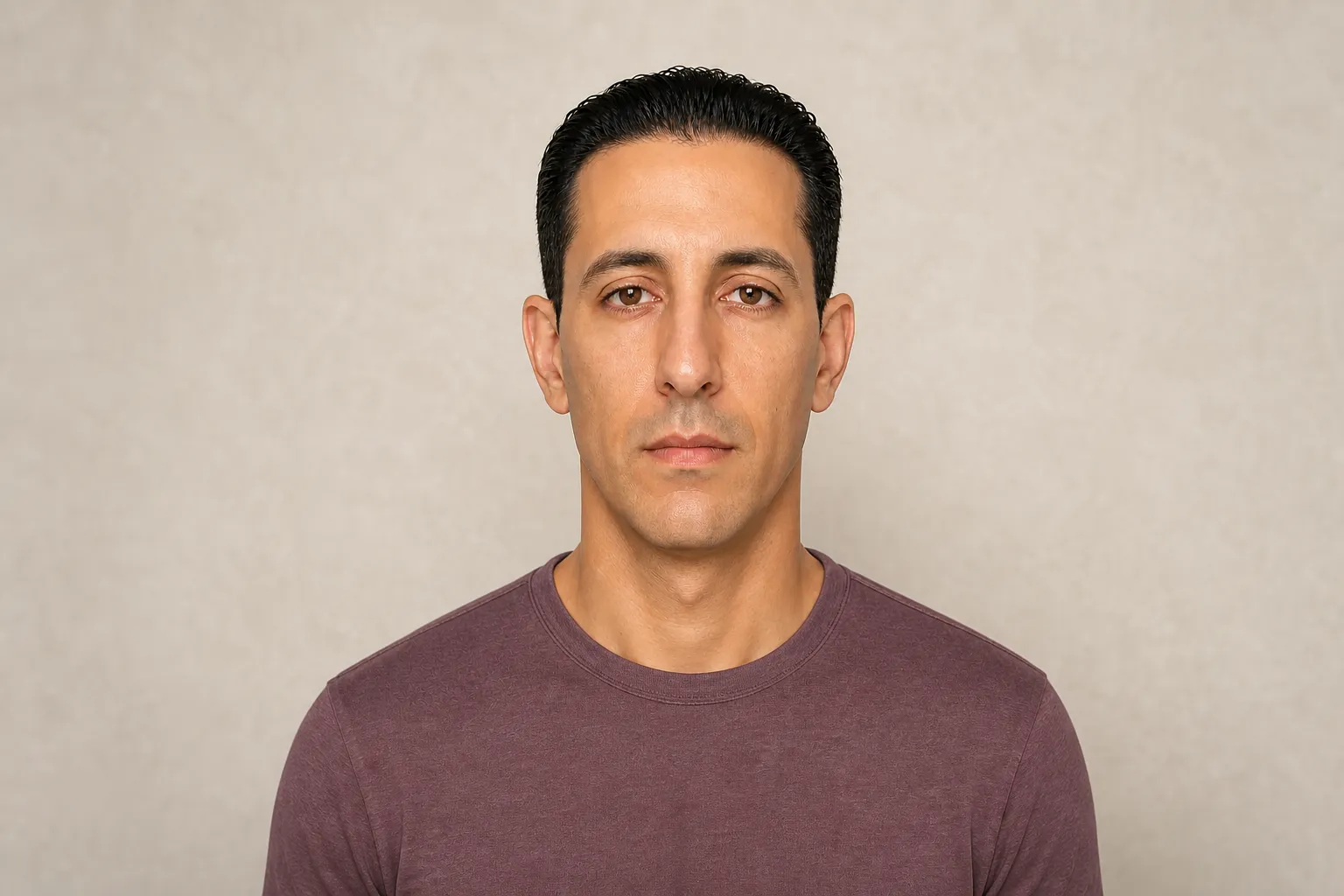
- 4
- Measurements to take
- 3
- Ratios that decide it
- 7
- Shapes compared
face length, forehead, cheekbone and jaw width
each width divided by cheekbone width, and length divided by it too
the same seven profiles the tool classifies against
The short answer
Take four measurements with a soft tape: face length from hairline to the bottom of the chin, forehead width at its widest, cheekbone width across the two highest points under the outer eye corners, and jaw width from the corner of one jaw to the other. Then divide each of the other three by cheekbone width. Those three numbers, not your impression in a mirror, are what separates the seven shapes.
01Where exactly to put the tape
Use a soft tailoring tape rather than a rigid one, stand square to a mirror, and keep your head level. Tilting the chin up or down changes face length more than any of these measurements differ between people, which is the single biggest source of a wrong answer.
- 1Face length. From the centre of your hairline straight down to the bottom of your chin. If your hairline is receding or uneven, measure from the point where it sat rather than the highest bare skin, and say so to yourself when you read the result.
- 2Forehead width. Across the widest part of the forehead, which is usually about halfway between your eyebrows and your hairline rather than at the hairline itself.
- 3Cheekbone width. From the top of one cheekbone to the top of the other, taking each point just below the outer corner of the eye. This is the measurement people most often take too low, on the cheek rather than the bone.
- 4Jaw width. From the corner of the jaw below one ear to the corner below the other, following the bone rather than the soft tissue under it. Measure the corners, not the chin.
02The three ratios, and what each shape sits at
A face shape is not a measurement in centimetres, it is a set of proportions. That is why a small face and a large face can be the same shape. Divide face length, forehead width and jaw width by cheekbone width, and compare the three results against the table below.
| Shape | Length / cheek | Forehead / cheek | Jaw / cheek |
|---|---|---|---|
| Oval | 1.38 | 0.92 | 0.82 |
| Round | 1.06 | 0.90 | 0.88 |
| Square | 1.10 | 0.96 | 0.97 |
| Heart | 1.22 | 1.00 | 0.72 |
| Diamond | 1.27 | 0.78 | 0.74 |
| Oblong | 1.58 | 0.90 | 0.84 |
| Triangle | 1.16 | 0.78 | 1.02 |
These are this site's editorial comparison centres, published so an answer can be checked, and they are the same figures the tool compares your measurements against. They are not anthropometric norms, and real faces sit between them more often than on them.
Read them together rather than one at a time. Length separates the long shapes from the wide ones. Jaw against cheek separates a tapered lower face from a square one. Forehead against cheek is what distinguishes a heart from a diamond, because both taper at the jaw and differ at the top.
03Why a photo and a tape can disagree
A camera close to the face enlarges whatever is nearest the lens, which is usually the nose and the cheekbones, so a selfie tends to widen the middle of the face. A tape does not have that problem, but it has others: hair pushed forward hides the jaw corners, and a head tilted five degrees shortens the apparent length.
If the two methods disagree on this site, they disagree in a visible way rather than silently. The tool shows the ratios it used and how close the runner-up was, so a measurement you take yourself can be compared against them directly instead of being taken on trust.
04What the numbers cannot settle
Roughly half of real faces sit near a boundary between two shapes, which means the label is a judgement about which side of a line a number falls on rather than a fact about the face. When two ratios point one way and the third points another, treat the result as two candidate shapes and read both sets of advice.
The measurements also say nothing about whether a face is attractive, and no ratio on this page should be read that way. They exist to narrow a decision about a haircut or a pair of frames, which is a smaller and more useful job.
Common questions
Sources
Every figure quoted above is listed here with what it was used for and when the source was last checked. Anything not attributed to a source is this site’s own reading and is labelled as such where it appears.
Matrix
How To Choose The Best Hairstyle For Your Face ShapeThe definitions of the seven profiles the ratio table is built to separate.
Last checked 31 July 2026
All Things Hair
How Do I Determine My Face Shape?The measuring method described here, including taking cheekbone width at the top of the bone and jaw width at the corners.
Last checked 31 July 2026
WhatSuitsMe
Face shape ratio profilesEvery figure in the ratio table, read from src/data/face-shape-data.ts, which is the table the classifier compares measurements against.
Last checked 29 August 2026
Check it against your own measurements
Enter the four measurements you just took, or use a photo, and the tool shows the three ratios and how close the runner-up shape was rather than handing back a single word.
Check your measurements against the toolRead next
- Do I have a square jaw?the jaw to cheek ratio on its own, and what counts as square
- Stuck between two shapeswhat to do when two ratios disagree
- The seven shape guidesone page per shape, with the tells that separate the near misses
- Can Your Face Shape Change? Weight, Age and BracesYes, but not evenly. Of the three ratios that decide a face shape, one moves easily with weight, one barely moves at all, and the third takes decades.