The butterfly haircut: 135,000 searches a month, four shapes it suits, one it fights
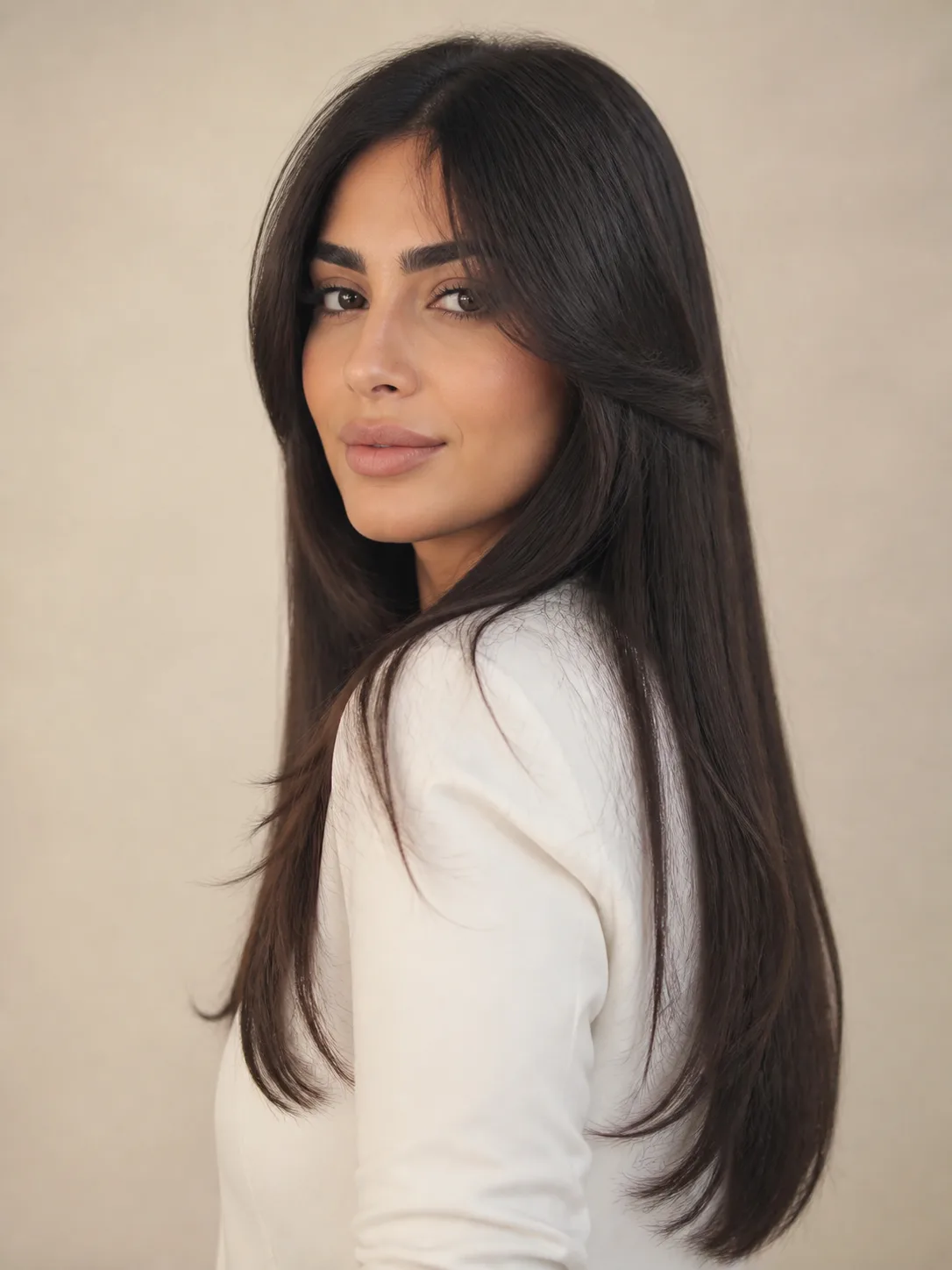
Short internal layers, long outer length. It is a good cut and it is not a neutral one, because the face-framing pieces land exactly where a round face is already widest.
Last reviewed 2 August 20265 min readSravya
- 135k
- Searches a month
- +23%
- Growth over six months
- 1.15
- The length ratio to check
Fourth on the 2026 leaderboard and still climbing.
Rising, unlike the three terms above it on volume.
Below it, the face-framing layers land on width you already have.
The short version
The butterfly is two cuts in one head of hair. Internal layers are cut short so the crown lifts, and the outer length is left alone so nothing appears shorter from behind. That combination adds height without adding width, which is exactly what an angular or long face wants and the opposite of what a round face needs. Oval, oblong, square and diamond all gain from it. Round is the one shape where the standard version is arguing with the face, and the fix is to move the shortest face-framing piece below the jaw rather than at the cheek.
01What the cut is actually doing
Graduated layers build movement and volume at the crown while the lengths stay fluid, with face-framing pieces falling around the cheekbones or eyes. That last detail is the whole story. A face-framing piece is a horizontal line, and a horizontal line at the cheekbone reads as width.
On a face that measures clearly longer than it is wide, that added width is a correction and the cut looks balanced. On a face where length and width are already close, it is not a correction, it is an amplifier.
02Shape by shape
| Shape | Verdict | Why |
|---|---|---|
| Oval | Yes | Enough length to carry crown height and enough narrowness at the jaw for the layers to fall cleanly. |
| Oblong | Yes, with the layers kept low | The length is there. Keep the volume at the cheek rather than the crown so the face is not lengthened further. |
| Square | Yes | Movement at the cheek breaks the vertical line of a square jaw, which is the softening a square face is usually after. |
| Diamond | Yes | Volume above the cheekbone and length below it give a narrow forehead and chin something to sit against. |
| Heart | Close | Works if the length is kept below the jaw. A short framing piece leaves a pointed chin with nothing beside it. |
| Triangle | Adjust | Crown volume helps. Ask for the framing to start below the jaw so the widest part is not emphasised. |
| Round | Fights it | The framing lands at the cheek, which is where a round face is already widest. Move it or skip it. |
03Where it sits against the rest of the year
On volume it is fourth. On direction it is better placed than that, because the three terms above it are either falling or several years into their run. A cut on 135,000 searches and rising 23 percent over six months is one people are still discovering.
What people are actually searching for
avg. monthly searches- 01Low taper fadeCut550k-55%
- 02Modern mulletCut450k+508%
- 03Boho braidsStyling165k13x
- 04Butterfly haircutCut135k+23%
- 05BixieCut110k+122%
- 06French cropCut91k+22%
- 07Peekaboo colourColour91k+234%
- 08Broccoli cutCut50k+83%
- 09Frontal ponytailStyling22k+825%
Volume and growth from Rising Trends, data dated 13 July 2026, checked 2 August 2026. Growth windows differ by term and are shown as published. The face shapes beside each cut are this site’s own reading of what the cut does to a facial outline, not the source’s.
Common questions
Sources
Every figure quoted above is listed here with what it was used for and when the source was last checked. Anything not attributed to a source is this site’s own reading and is labelled as such where it appears.
Grazia
The butterfly bob is the most Googled haircut of summer 2026Description of how the butterfly bob is cut and where the face-framing pieces are meant to fall.
Last checked 2 August 2026
Rising Trends
Top Haircare Trends in 2026 (backed by data)Average monthly search volume and growth figures for every named cut quoted on this page. Data dated 13 July 2026.
Last checked 2 August 2026
Check it against your own measurements
The figure this page turns on is length divided by cheekbone width. The tool reads it from one photograph and shows you the number, so you can decide where the framing should fall before you are sitting in the chair.
Check my length ratioRead next
- The most searched haircuts of 2026Where the butterfly sits against the other eight.
- The round face shapeThe one shape this cut argues with, and what to ask for instead.
- Does a pixie suit your face?The opposite problem, decided by the same two ratios.
- How to Measure Your Face ShapeEvery face shape tool claims to measure your face and then shows you a word. This is the measuring itself: where the tape goes, which four numbers matter, and the ratios each shape sits at.