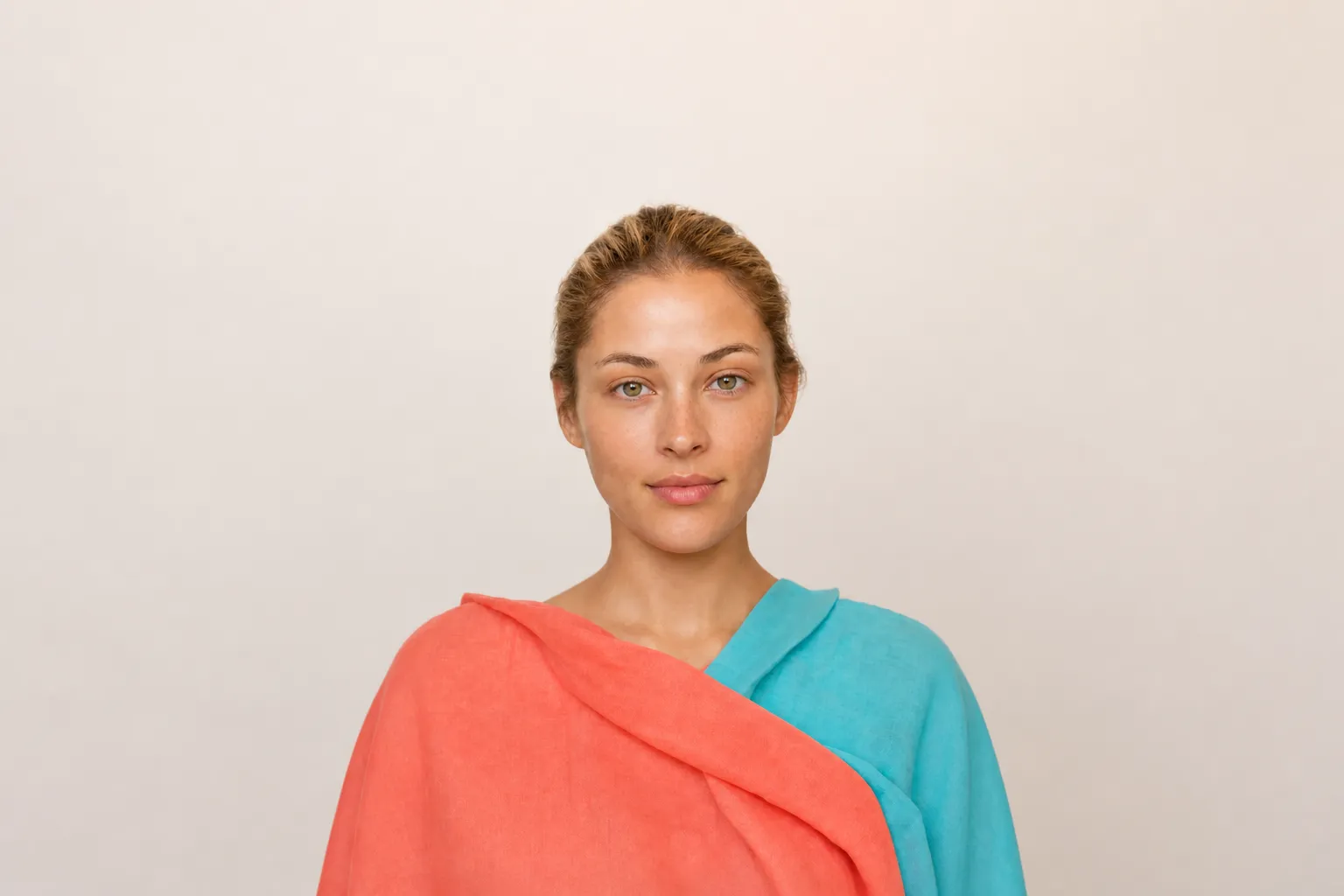
These are the weights the tool applies to each at-home check, not measured optical values. No single check is reliable on its own, which is exactly why the tool runs all four and weighs them against each other rather than asking one question and announcing an answer.
Undertone is the colour underneath the surface of the skin, and it stays the same whether you are pale in February or tanned in August. That is the difference between undertone and skin tone. Skin tone is the surface colour, and it changes with sun, sleep and season. Undertone does not, which is why the checks below look underneath it.
A warm undertone has a golden, peachy or yellow base. It is independent of how light or deep the skin is: warm undertones occur across every complexion, and the common assumption that deeper skin is automatically warm is simply wrong. Plenty of deep skin is cool or neutral and plenty of very fair skin is warm. Searches for a warm skin tone usually mean this: a golden base underneath, at any depth of skin.
The four checks, in order of how much they count
Veins, which the tool weights at 2 and which is the most consistent single check. In natural daylight, look at the inside of your wrist. Green or olive-looking veins point warm. Do this by a window rather than under a bulb, because indoor lighting shifts the reading more than the difference you are trying to see.
Jewellery, weighted at 1.5. Hold gold against your skin, then silver. On warm skin gold tends to look like it belongs and silver can look slightly grey against it. The catch is habit: if you have worn one metal for years, it will look correct because it is familiar. Judge the skin next to the metal rather than the metal itself.
Sun response, weighted at 1. Warm skin more often tans before it burns. This is the weakest of the four because it depends on exposure history, medication and how carefully someone uses sunscreen.
White fabric, weighted at 1. Hold a pure white sheet of paper next to your face, then an off-white or cream one. Warm skin usually looks healthier against cream and slightly sallow against pure white.
Neutral is what you get when the checks disagree or sit on the fence. If gold and silver both look fine and the veins are hard to call, that is neutral rather than a weak warm.
Olive skin has a green cast alongside warmth, and often reads warm on the vein check while looking wrong in the golden foundations that warmth would predict. If warm foundation turns orange on you, look at olive.
The principle behind every suggestion below
Colours with a yellow or golden base sit with the skin, and colours with a blue base sit against it. That is the whole of it, and it applies equally to clothing, foundation and metals.
Colour and makeup
Undertone decides direction, not intensity. It tells you whether to move towards the golden side of a colour or the blue side. How light, deep or bright the colour should be is a separate question that the colour season tool answers.
Worth reaching for
Foundation labelled warm, golden or with a W in the shade code
Gold, brass, bronze and copper metals
Cream, ivory and warm off-white instead of optical white
Coral, peach, warm red, olive green, camel and warm brown
Works against it
Foundation with a pink or rosy base, which tends to read ashy on warm skin
Pure optical white next to the face, which can look draining
Icy pastels and blue-based pinks, which fight the skin's base
Assuming warm means you cannot wear blue: warm-leaning blues such as teal work well
The foundation test that actually works
Swatch three shades along the jaw, in daylight, and walk away for ten minutes before judging.
Foundation oxidises on contact with skin and most shades shift warmer within a few minutes. Judging immediately, under shop lighting, is why so many people end up a shade too orange.
Where people go wrong
Confusing undertone with skin depth
Warm is not a synonym for tanned or deep, and cool is not a synonym for pale. Both undertones occur at every depth of skin. The two are separate axes and treating them as one is the most common error in this whole area.
Checking veins under artificial light
Indoor bulbs cast their own colour, and the shift they introduce is larger than the green-versus-blue difference you are looking for. Daylight by a window is the only reliable condition.
Trusting the jewellery check alone
It is the second most reliable check but it is heavily affected by habit. Someone who has worn silver since childhood will find gold looks strange regardless of their undertone. Look at what the metal does to the skin, not at whether the metal looks normal.
Common questions
No. Surface tone changes with sun exposure, season and age, but the base underneath stays the same. If a foundation that used to match now looks wrong, the shade depth has usually drifted rather than the undertone.
Two likely reasons. Habit is the common one: silver simply looks correct because it is what you are used to. The other is olive skin, which often reads warm on the vein check while behaving differently in practice. The olive guide covers that case.
Not avoid, but be aware of what it does. Black is cool and high contrast, so on warm skin it can look heavy right at the face. Wearing it away from the face, or breaking it with a warm colour at the neckline, keeps it working without any rule about not owning black.
The safety note explaining that the sun-response clue does not call for UV exposure.
Last checked 2026-07-31
Not sure this is you?
The tool runs all four checks, weighs them against each other, and tells you which ones disagreed. When the evidence is mixed that is the useful information, because mixed evidence is what neutral actually means.